
Taking the Pulse for the Second Half of 2026
We surveyed a broad range of American Beacon sub-advisors and asset management partners this summer to get their takes on the economy, inflation, risks and opportunities across sectors and regions, AI, the Fed and more as investors look ahead.
The headline?
Managers remain bullish but are far from euphoric.
Risks continue to run a wide gamut but recession worries are low. We’re more likely to see the market continue to grind higher than experience any kind of sustained drop.
Thirty-four of the 60 sub-advisors we surveyed responded, and their collective view points toward elevated but steady inflation, with many seeing the equity rally broadening to other sectors of the market. Constantly lurking though are risks stemming from the ongoing conflict in the Middle East and all of its offshoots, including impacts on energy prices and knock-on effects on inflation as we move through the third and fourth quarters.
The real surprise would be any surprise at all:
A common theme from the survey was a belief that the current state of affairs, both for the economy and market, will continue for the rest of 2026.
Recession probabilities are estimated to be low, and neither U.S. fiscal policy nor the upcoming midterm elections are seen as meaningful risks to equities by the majority of those surveyed.
The Middle East is the risk that shapes every other forecast:
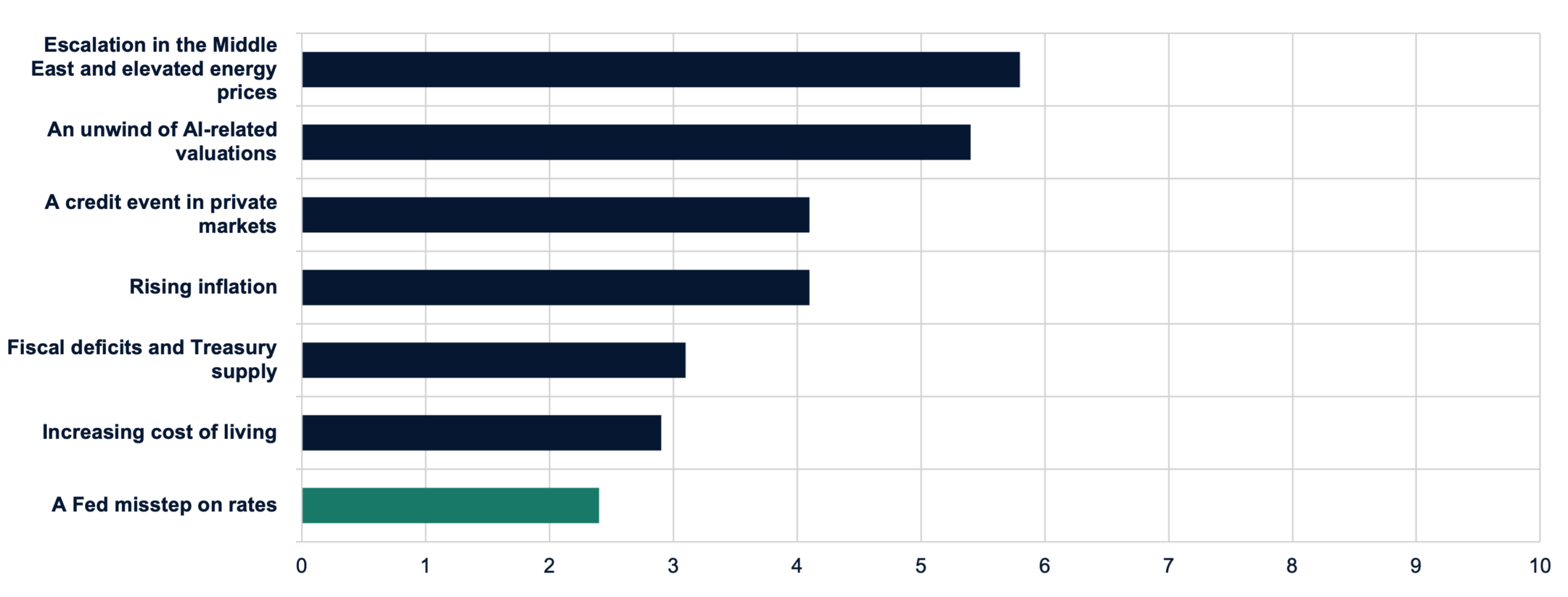
52% of respondents rank escalation in the Middle East and elevated energy prices as intertwined concerns that top their lists of worries, far ahead of any other risk.
Inflation “warning lights” are set accordingly: 63% say a 5% headline Consumer Price Index (CPI) print would force a rethink, and 16% say their warning light is already flashing.
Source: American Beacon Advisors, Pulse Survey: Second Half 2026 Outlook
Not a single manager picked private credit for income
Asked to name the most attractive income opportunities for the second half (respondents could select up to three), zero of 31 respondents selected private credit. Dividend-paying equities topped the list at 35%, followed by asset-backed securities at 29%.
Managers appear to want income from liquid, transparent sources, and a credit event in private markets now ranks as their third-biggest concern.
10-year getting too high for comfort
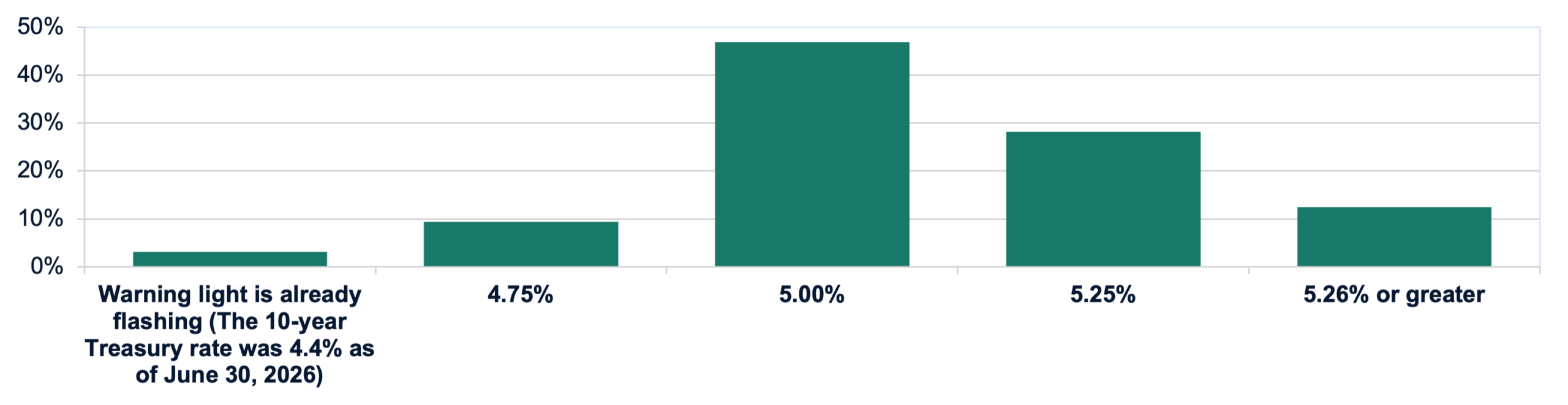
For ~10% of respondents, the warning light yield on the 10-year U.S. Treasury is 4.75% (the 10-year stood at 4.4% when the survey was fielded), and breached 4.99% on September 14.
Nearly half put the warning light level at 5%, indicating that bond yields may present a lingering risk for markets in the second half of the year.

AI Tools Are a Boon to Manager Productivity, an Unwind of AI-Related Valuations Is a Major Concern
84% of respondent firms are now making use of AI tools in investment analysis and research, the highest adoption of any job function surveyed.
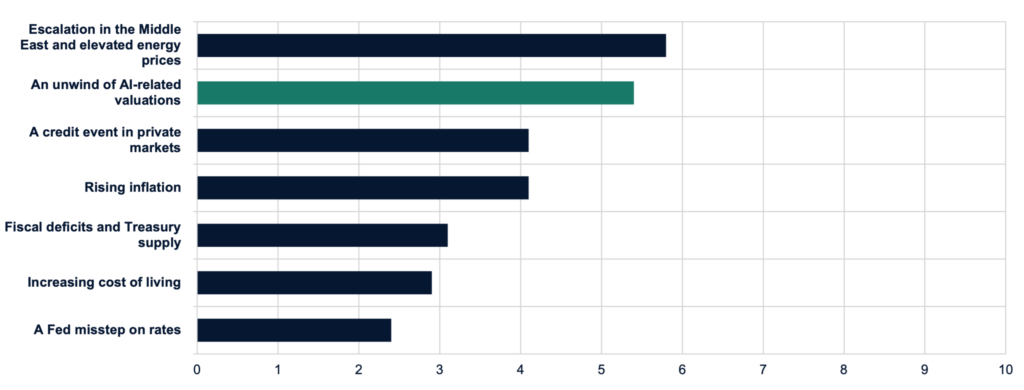
But the same managers score AI valuations an average of 3.7 out of 5 on the “bubble scale,” and an unwind of AI-related valuations ranks No. 2 among managers’ biggest concerns for the second half of 2026.

“We work with some of the savviest and most sophisticated asset managers today, operating across a wide range of equity, fixed income and alternative categories. And when they align, as so many of them did in our latest survey, on concerns regarding the 10-year U.S. Treasury yield and risks of an ‘AI unwind,’ it is worth noticing and discussing how these views might inform portfolio positioning for the rest of this year and beyond.”
– Greg Stumm, President & CEO, American Beacon Partners and American Beacon Advisors
PERSPECTIVE 1: THE FED IS TRUSTED, NOT FEARED

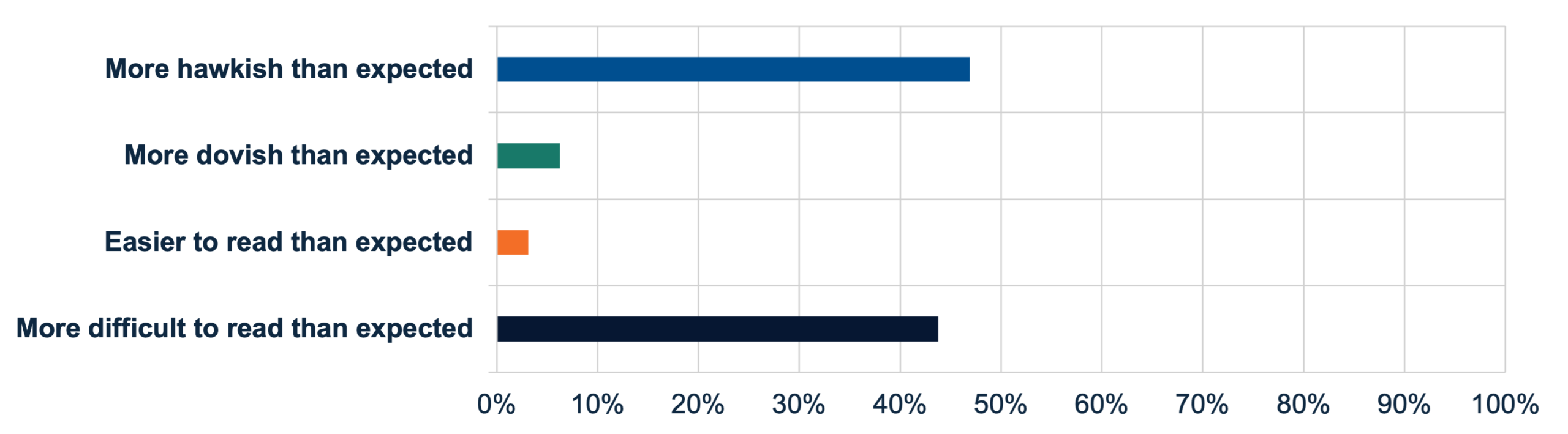
A near-majority of 47% of respondents said that monetary policy under Fed Chair Kevin Warsh is more hawkish than they expected.

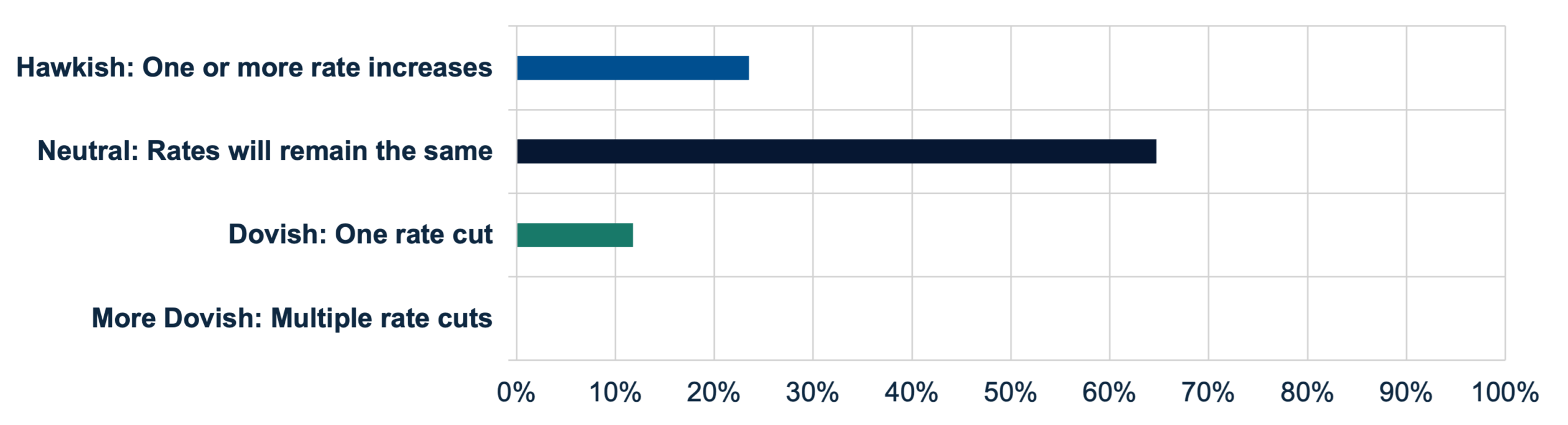
Not one manager sees multiple rate cuts, with 65% believing the central bank will be on hold for the remainder of the year.

Meanwhile, 44% of respondents report that the Fed has become harder to read.
However, a misstep by the FOMC is ranked dead last among potential risks for the remainder of 2026.
The bottom line: Even with less visibility, managers still trust the Fed, or don’t fear it.
Stuck in Neutral: Clear Majority Expects No Hike or Cut in 2H2026
A More Hawkish Fed, and One That’s Tough to Read
A Fed Misstep on Rates Is Not a Pressing Worry
PERSPECTIVE 2: “WARNING LIGHTS” AROUND THE 10-YEAR TREASURY YIELD WERE ALREADY GOING OFF, AND IN MID-AUGUST THE MARKET HIT ONE

Respondents might not fear the Fed but they’re fretting over the 10-year Treasury yield.

On August 31, the 10-year reached 4.75%, its highest level in 19 months and the 4.75% where roughly 10% of respondents said their warning lights would turn on. Another 3% said their lights were already flashing when the survey was fielded in late July.

Nearly half of respondents indicated their concerns would rise once the number hit 5%, a level the market is now openly debating as yields have climbed.
However, a misstep by the FOMC is ranked dead last among potential risks for the remainder of 2026.
Even Before the August Spike, Some Warning Lights Were Already On

“A 5% 10-year Treasury yield would be a clear warning light because it would indicate a potentially disorderly rise in term premia, fiscal concern or inflation credibility risk, consistent with the bond-market-rout risk framework.”
– Asset Manager Survey Respondent
PERSPECTIVE 3: BULLISHNESS, YES; EUPHORIA, NO

Survey respondents were modestly bullish on equities through the remainder of 2026, with 65% seeing the S&P 500 Index up 0% to 10%.

A handful of respondents saw
the market down by more
than 10%, while only one
predicted a rally of more than
10%.

So, while there’s a strong bullish consensus, evidence of euphoria is all but absent.
Equity Gains Foreseen – but No Melt-Up
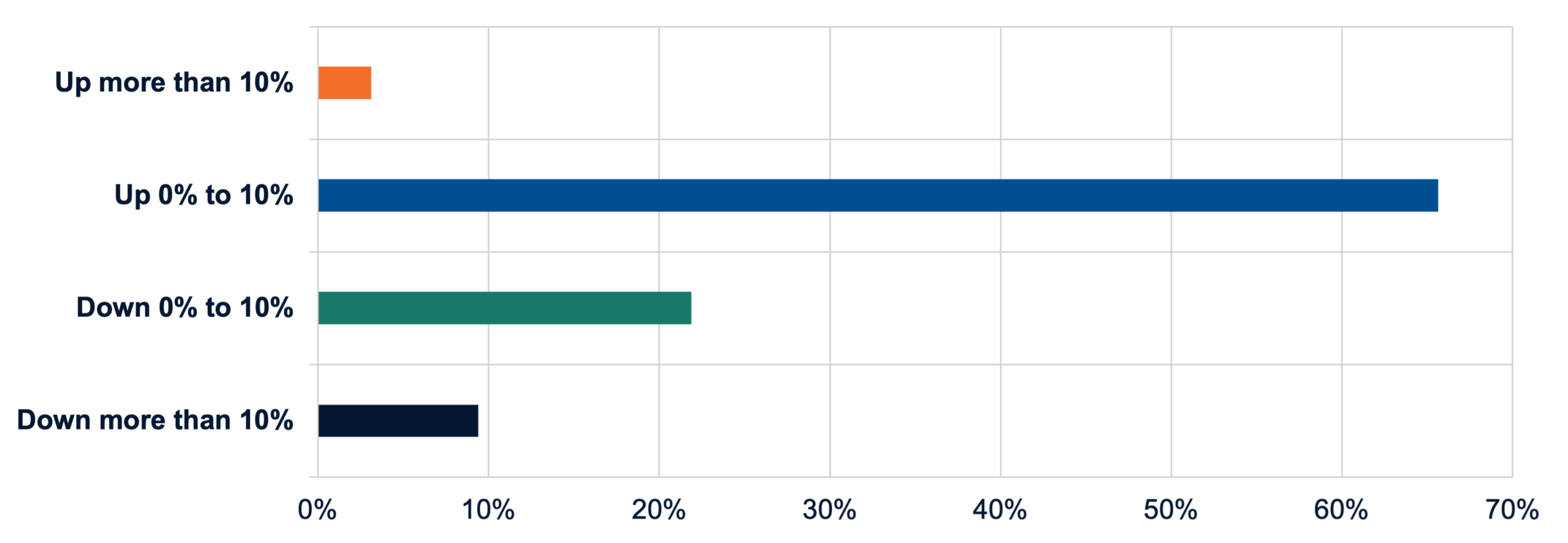
Respondents were asked to select a range according to where they believe the S&P 500 will be at year-end.
Getting Rid of Bad Breadth? Many See Rally Broadening
50%
Nearly 50% of respondents believe equity leadership will broaden from mega-cap technology stocks to other sectors in the second half.
30%
Over 30% believe index concentration in tech names will persist at current levels during this timeframe.
22%
22% of respondents predict mega-cap tech leaders will correct from now until year-end.

“Index concentration combined with a broadening equity rally could bode well for active management. We remain big believers in active management in those areas of the market where skill, experience and acumen can add tremendous value.”
– Paul Cavazos, Chief Investment Officer, American Beacon Advisors

Respondents were asked to select the answer that best captured their views regarding whether they expect a change in market concentration by year-end.
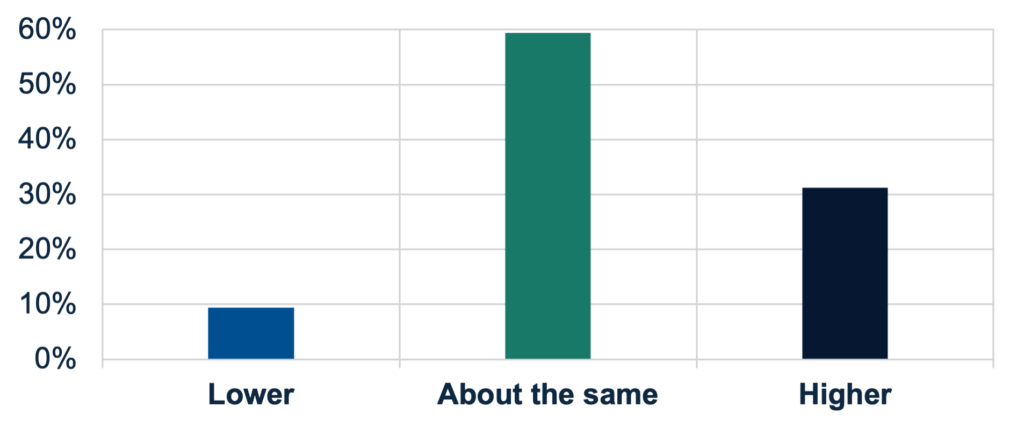
Majority Sees Equity Volatility Staying Around Current Levels
Consistent with their outlook for modest gains in the stock market, most respondents expect equity volatility to hold near current levels in the second half of the year, though roughly a third are bracing for higher volatility.
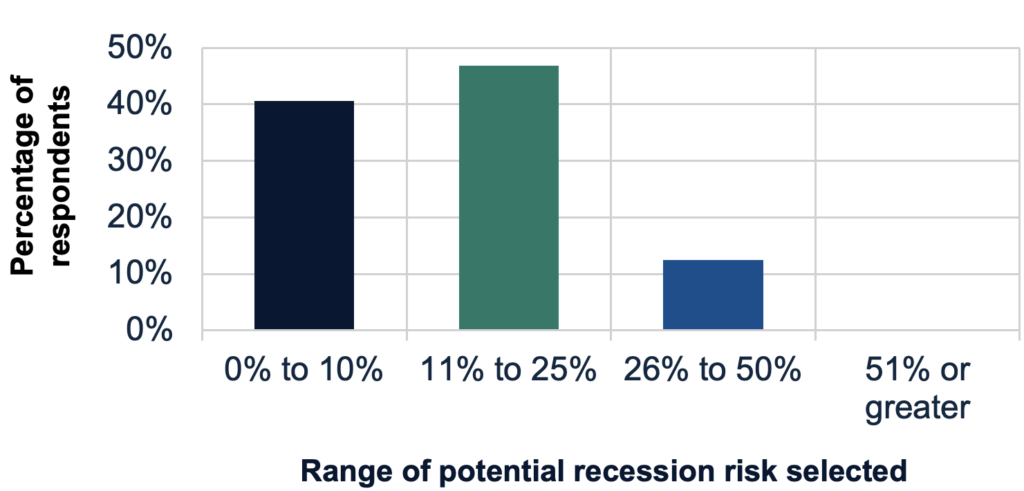
Recession Risk Seen as Low in Coming Year
Respondents do not anticipate an economic contraction: 88% put the odds of a U.S. recession in the next 12 months at 25% or less, and not one respondent put the probability above 50%.
PERSPECTIVE 4: ASSET MANAGERS ARE ALL-IN ON AI TOOLS BUT GROWING WARY OF THE AI TRADE

Respondents report using AI tools for a wide range of functions, from recordkeeping to internal communications.

Intriguingly, the survey shows that investment analysis and research has seen the widest adoption. Pulse
AI as a Technology Is Being Fully Embraced
The embrace of AI as a tool does not mean managers are in love with the AI trade:
Indeed, an unwind of AI-related valuations ranks second among sub-advisor concerns for the second half of the year.
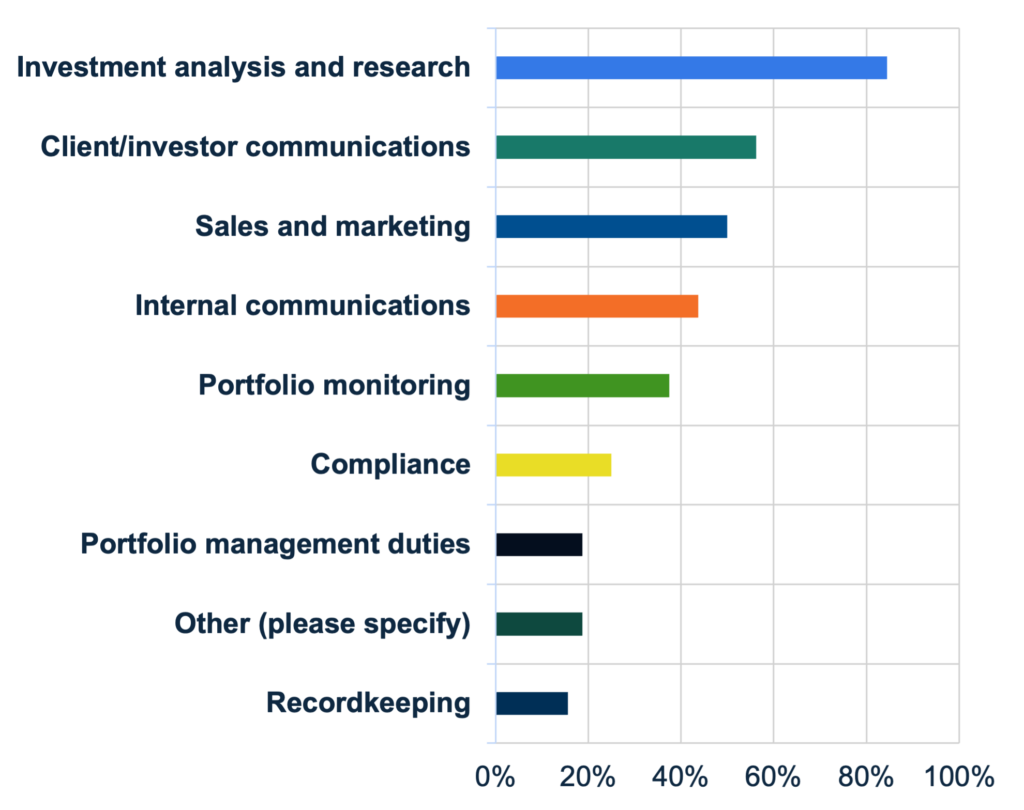
Respondents were asked to select those functions for which their firm is currently using AI (multiple answers were allowed).
Does the Market Have Too Many Chips in the AI Trade?
Driving the worry about a potential AI unwind is widespread belief that AI-related valuations likely indicate a bubble.
The average respondent scores the AI trade at 3.7 out of 5, with 5 being “definitely a bubble.”
Not a single respondent said AI is “not a bubble.”
AI Viewed as Bubble to Varying Degrees
Share of participants by rating, 1 (not a bubble) to 5 (definitely a bubble)
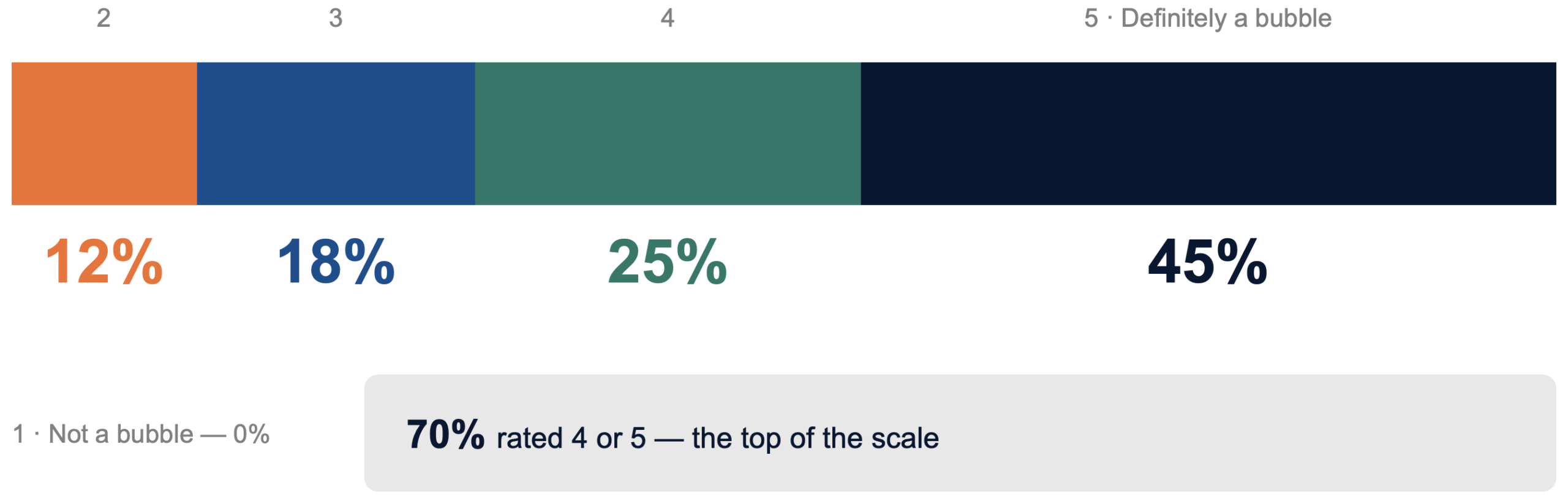
Participants were asked to rate their answers on scale where ‘1’ meant they do not believe we are in an AI bubble, up to ‘5’ for those who believed AI is “definitely in a bubble.”
PERSPECTIVE 5: THE MIDDLE EAST CONFLICT CONTINUES TO ADD UNCERTAINTY, WHILE OTHER SURPRISES MAY BE BUBBLING

More than 50% of respondents rank an escalation of the Middle East conflict and elevated energy prices at the very top of their list of concerns.
Concerns over inflation and Middle East escalation and energy prices go hand in hand, and close to two thirds of respondents say a 5% headline print for the CPI would force a major rethink in their respective approaches.
Middle East Escalation and Energy Prices Top the Worry List
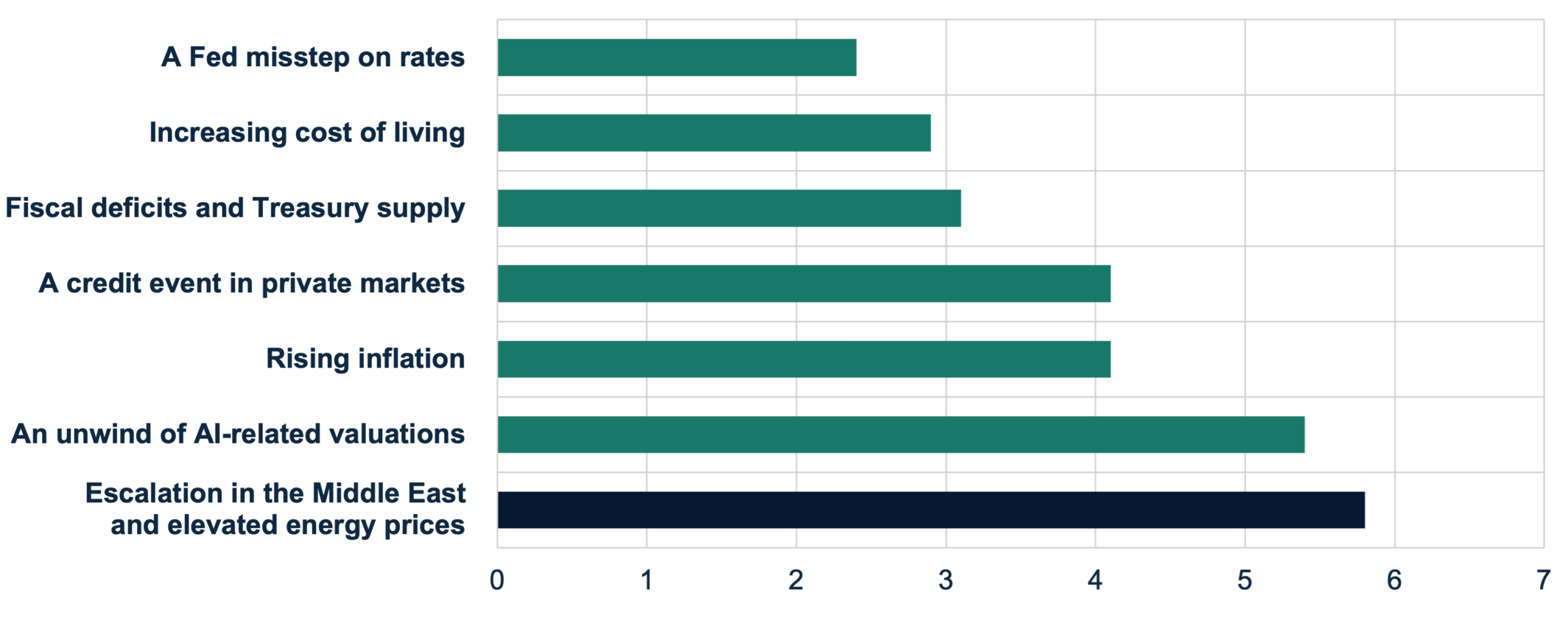
Respondents were asked to select their top worry for the rest of the year.

“All forecasts for the second half of 2026 depend on the duration and severity of the Iran war. If hostilities do not end in August, my inflation expectations would likely increase, and the Fed’s reaction function could be more hawkish …”
– Asset Manager Survey Respondent
“Once the Iran war ends, I expect the U.S. dollar to depreciate, developed market yield curves to steepen, and non-U.S. equities to outperform U.S. equities …”
– Asset Manager Survey Respondent
The war with Iran no doubt tops many lists of the “surprise stories” of 2026 for the first half of the year.
Our respondents were asked to make their selections for the surprise stories of the second half. Their predictions included:

Higher unemployment

Quality reasserting its leadership

Oil spiking above $125/barrel

“Risk assets getting risky”

An accelerating AI-driven rally blindsiding skeptics

Emerging Market equity resilience and broadening of performance drivers
“A plausible surprise story is that markets remain more resilient than feared, energy prices retreat enough for inflation to keep falling, the Fed stays on hold rather than hiking, and AI capex continues to support growth …”
– Asset Manager Survey Respondent
In Conclusion
With the end of the year approaching, our survey shows optimism but not exuberance about the U.S. economy and equities. Crucially, the potential downside is front and center despite the baseline forecasts. Respondents point to energy spikes and an AI-unwind as key worries.
Investment Implications
- Respondents’ views on index concentration, a broadening rally and the risk that the AI trade falters point to an environment where active management may add meaningful value;
- In fixed income, the majority of respondents predict the yield curve will steepen from current levels, and not one sub-advisor expects the curve to invert; and
- Respondents’ widespread concerns about energy prices suggest that inflation-sensitive assets may play a diversification role in portfolios in the coming months.
Optimistic but not complacent, the managers surveyed shared a wealth of insights and knowledge with us, and we’re pleased to share their perspectives with the marketplace as we accelerate toward the end of a fascinating 2026.
About the survey: Fielded July 22 to July 31, 2026. Thirty-four investment professionals responded out of 60 invited from among our sub-advisors and asset management partner firms. Per-question response counts range from 31 to 34, and percentages are based on the number of respondents answering each question. Results are reported in aggregate, respondent comments are anonymized and all findings reflect the views of survey respondents, not those of American Beacon.
This material is provided for informational purposes only and does not constitute investment advice or a recommendation of any security, strategy or product.
American Beacon’s commitment to providing access to a broad range of high-quality investment strategies and products through our best-ideas open architecture platform, extends to also providing you the best thinking from our 25-plus sub-advisor relationships. Our periodic Pulse Survey provides you with insight into what they are anticipating for the months ahead.
Any opinions expressed, including economic and market forecasts, reflect the opinions of our Pulse Survey respondents, which may not reflect those of their firms, American Beacon Partners or American Beacon Advisors. The discussion herein is not intended to be a complete analysis of economic or market conditions and, therefore, should not be relied upon as investment advice. You should independently determine whether a particular product or service is suitable for your needs. This information will not be updated to reflect changes in economic or market conditions or the opinions of our Pulse Survey respondents, and the information herein may become inaccurate or outdated. All investing involves risk, including possible loss of principal.
Pulse Survey numeric results may be rounded for simplicity and percentages may not equal 100% in total.
Capex: Capital expenditure are monies used by a company to acquire or upgrade physical assets such as property, industrial buildings, or equipment.
Consumer Price Index: A measure that examines the weighted average of prices of a fixed basket of consumer goods and services (such as food, transportation, shelter, utilities, and medical care), and is widely used as a cost-of-living benchmark.
Term Premia: Often called “term premium,” refers to the extra yield investors demand to hold a longer term bond instead of rolling over a series of short term bonds.
Valuation: The process of determining the value of an asset or company. Stock analysts determine the value of a company based on current and future earnings, the market value of the company’s assets and the balance sheet. A company with a high price-to-earnings ratio is said to have a high valuation or be highly valued. Bond analysts determine the value of a bond based on projections of future interest rates, and they use their valuation to determine whether a bond should be bought or sold at its current price.
Volatility: A statistical measure of risk. Volatility can either be measured by using the standard deviation or variance between returns from that same security or market index. Commonly, the higher the volatility, the riskier the security.
Yield: The annual return on an investment, expressed as a percentage of the price. For stocks, yield is the annual dividend divided by the purchase price, also known as a dividend yield. For bonds, it is the coupon rate divided by the market price, called current yield.
American Beacon Partners is the parent company of American Beacon Advisors. American Beacon is a registered service mark of American Beacon Advisors, Inc.